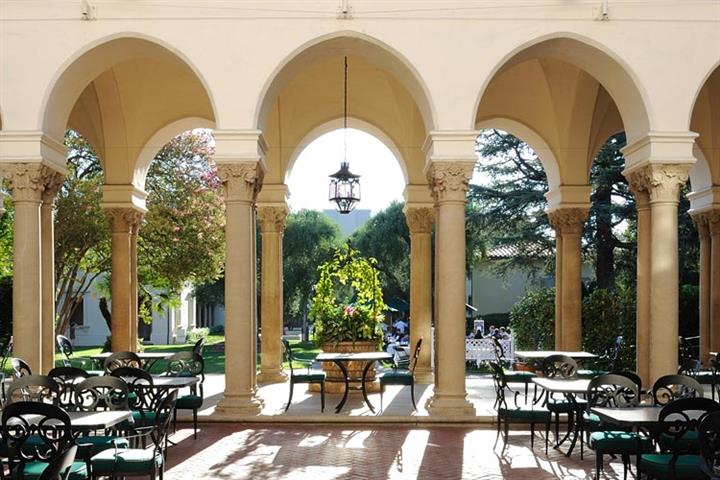
Saturday, December 30, 2017

Diesel death zones: particulate matter

A street without cars in Century City

Automobiles are a basic part of our lives, but they are exposing us to cancer.  New dimensions of that danger are exposed in this article today in the LA Times by Tony Barboza.

http://www.latimes.com/local/california/la-me-freeway-pollution-what-you-can-do-20171230-htmlstory.html

My friend Kathy McTaggart died of non-small-cell lung cancer in 2012 at age 69.  She had never smoked, so the source of her disease was particles in the air we breathe.

Particles are airborne as much as a mile from the freeway at night and in the early morning when air currents move, but only 500-600 feet in the daytime.

  • Keep your windows shut, experts say.  
  • Run air filters.  
  • Don't exercise or live near a freeway, especially where there are interchanges or jammed traffic.
  • Keep your windows shut while driving.

But everyone in Los Angeles lives not too far from a freeway.

And even if all cars were electrical, the friction on rubber tires and brakes and lubricating oils creates fine particles.

Here's part of Barboza's report:
It’s especially unhealthful to live near freeways and roads frequented by diesel trucks, which spew many times more harmful gases and particles than cars. Diesel particulate matter, carcinogen-laden soot that deposits deep in the lungs, is responsible for the bulk of the cancer risk from air pollution and more than 1,000 early deaths a year in California.
Experts are most concerned about people living near ports, warehouse distribution centers and other freight corridors. Asthma rates and cancer risk there can be so elevated that physicians have labeled it the “diesel death zone.”
An air-monitoring station next to a truck-congested stretch of the 60 Freeway in Ontario had the highest levels of fine-particle pollution, or soot, of all near-roadway sites in the nation, according to 2015 U.S. Environmental Protection Agency data. About 217,000 vehicles a day passed by in 2015, more than 29,000 of them trucks.
I don't know what to do about this problem.  Stop driving?  Move to somewhere far from freeways and power plants, whether coal or nuclear or other?

I will do what I can: encourage you to read this article researched by Tony Barboza and published by the Los Angeles Times.


Friday, April 28, 2017

40,000 deaths from breast cancer in 2012

Here are the statistics on breast cancer and biopsy in 2012, as found in BasicMedicalKey.com by Darryl Carter, 5th ed.:

In 2012 in the United States, there were 230,000 new cases of breast cancer, 99% of them in women, with nearly 40,000 disease-specific deaths (1). A much larger number of lesions were detected on clinical and radiographic breast examinations, and many of these were sufficiently suspicious of cancer to result in a biopsy. Ultimately, it is the responsibility of the pathologist to distinguish those of the biopsied lesions, which require additional attention or treatment from those which do not. In addition, the pathologist must integrate and disseminate an increasingly complex set of pathology-derived data to radiologists, surgeons, and medical and radiation oncologists to achieve optimal clinical results.

Apparently, calcifications are often seen in mammograms and are often an indicator of cancer cells. This paragraph describes core needle biopsy and fine needle biopsy.

  NEEDLE BIOPSY
Core needle biopsy (CNB) has the advantage over fine-needle aspiration (FNA) of allowing identification of benign entities and localization of calcium deposits with the result that the proportion of indeterminate and inadequate specimens is far less. Distinction between in situ and invasive carcinoma may also be more readily accomplished, and predictive markers (estrogen receptor [ER], progesterone receptor [PR], HER2/neu, etc.) can be better evaluated. However, FNA may be done more quickly with a diagnosis of malignancy at the time of outpatient visit. In the evaluation of CNB, problems are encountered because of the limited size of the specimens and, not infrequently, the presence of crush artifact. Other problems include potential destruction of lesional tissue by hemorrhage or infarction and displacement of benign epithelium to simulate invasive carcinoma (3), although displacement of epithelium has also been reported following localization by guide-wire for excision of a mammographic abnormality (4). CNB of nonpalpable lesions requires radiographic guidance by either ultrasonography or stereotactic mammography. In CNB performed to evaluate microcalcification, it is important that the calcifications be identified on specimen radiographs (5) and confirmed in the histologic sections, even though calcifications imaged on radiographs are often larger than those seen histologically. Calcification is rarely seen in FNA. Uncertainty in the interpretation of a CNB or the finding of significant atypia should lead to open biopsy. In patients receiving neoadjuvant therapy, CNB specimens may be the only histologic evidence of cancer if there is a complete response.

And much more... to keep reading, go to the site: http://basicmedicalkey.com/breast-4/

Biopsy Result: No Cancer

It's all part of the cancer dance: biopsies that are positive for cancer cells and biopsies that are negative.

I got a call from my doctor this morning: "Good news: there was no cancer found in your biopsy.  The calcifications we saw in your mammogram were caused by columnar cell change and fibrosis."

I thanked her, and she told me to come back in six months, not a year, for another mammogram of the right breast only.

We pause here for a moment of gratitude dedicated to the Creator and to the incredibly complex universe of atoms, molecules, cells, and organisms that She caused to be.

I'm a free person again: no lumpectomy, no change in my status as a survivor.  I still have a 1-in-10 chance of the cancer found three years ago metastasizing.  If this biopsy had found cancer, I think my odds for long-term survival would have gone down.

The next step, of course, was an internet search:  what is columnar cell change?  And what is fibrosis in a breast?

And of course, columnar cell lesions of the breast can later develop into cancer.

Here's a discussion of columnar cell lesions from breast-cancer.ca :


Columnar cells are epithelial cells which have an elongated shape with a height about 4 times the width. Columnar cells are a normal part of functional breast ducts and TDLU’s, but sometimes they develop in unusual ways, or grow more rapidly than one would expect.
But if a women and a physician are talking about columnar cell lesions at all, in all likelihood following a breast cancer screening mammogram and subsequent microscopic analysis of a fine needle aspiration tissue sample, it means that there is either absolutely nothing to worry about, or if there is anything potentially worrisome, it has been identified at the earliest possible stage, in fact, too early to even warrant further investigation let alone treatment.
And, if by chance a columnar cell lesion were after some time to develop into something resembling ductal carcinoma in situ, it would be picked up and treated before developing into anything serious.
What I had before, in the left breast, was invasive ductal carcinoma (cancer of a milk duct that has grown a little beyond the duct).  In situ means still in place, inside the duct.

columnar cell co·lum·nar cell (kə-lŭm'nər) 
n. 
A cell, usually epithelial, that is tall, narrow, and somewhat cylindrical.
The American Heritage® Stedman's Medical Dictionary
  • Epithelial tissue is composed of cells laid together in sheets with the cells tightly connected to one another. Epithelial layers are avascular, but innervated.
  • Epithelial cells have two surfaces that differ in both structure and function.
  • Glands, such as exocrine and endocrine, are composed of epithelial tissue and classified based on how their secretions are released.

... an epithelial cell that is shaped like a column; some have cilia. Synonyms: columnar epithelial cell Types: spongioblast. any of various columnar epithelial cells in the central nervous system that develop into neuroglia. ... one of the closely packed cells forming the epithelium.

columnar cell - Dictionary Definition : Vocabulary.com

https://www.vocabulary.com/dictionary/columnar%20cell

Fibrosis and Simple Cysts in the Breast

Many breast lumps turn out to be caused by fibrosis and/or cysts, which are non-cancerous (benign) changes in breast tissue that happen in many women at some time in their lives. These changes are sometimes called fibrocystic changes, and used to be called fibrocystic disease. 

Fibrosis and/or cysts are most common in women of childbearing age, but they can affect women of any age. They may be found in different parts of the breast and in both breasts at the same time.

Inside your breast...

Here's everything you ever wanted to know about the structures inside your breasts and the various types of lesions (from benign to cancer) that can develop in them.

http://basicmedicalkey.com/breast-4/

This website has photos of cells and their changes, as well as diagrams of the ducts and how they change during lactation.

Wednesday, April 26, 2017

My Stereotactic Needle Biopsy


I walked out of the medical office and into the bright sunlight under a blue sky, glad to escape from the radiology equipment, computer screens, and radiologic technicians that had surrounded me for the previous two hours.  

I walked self-consciously, grateful for mobility and my strong legs.  Eighteen days earlier I'd been sitting by the bedside of Kathleen Mirante, no longer able to walk, dying of uterine cancer that had moved to her lungs.  

She has passed on to another state of being.  I am still here, emerging into the bright sunlight after a stereotactic needle biopsy with post clip.  Grateful.  

In my mammograms last Friday, three years after cancer was discovered in my left breast, there were spots of calcium in my right breast.  They are very small, seven specks in a cluster, looking like the Pleiades, fleeing Orion in the night sky. 

"These could be the sign of a tumor," Dr. Geeta Iyengar told me last Friday, recommending a biopsy.

Three years ago I lay on a table as she found the right spot, numbed the area, and shot the thin needle in, sucking out a bit of tissue from the tumor.

This time I was sitting up with my right breast squeezed flat by a mammogram machine that enabled her to pinpoint the spot on a computer screen before a needle stabbed in and sucked.  Above me hung one of the crystal chandeliers that give patients something to see while looking up.  There's one in every room. 

Actually the name of the machine is Selenia Dimensions, and it is accredited by a college:


This equipment has been accredited by the
American College of Radiology
while in service at

As my breast was being pushed into place and my arm lifted away, I realized, "I'm being woman-handled."  The doctor and her two radiologic techs are women.  I felt safe and secure during it all, grateful that no men were involved.

This procedure costs $2,200 -- but I think Medicare will pay for it.

Dr. Iyengar told me to return Friday for the report after the tissue is analyzed.  I wonder why she didn't just handle it by a phone call.  Does the appointment mean that there's at least a 50% chance that it is another cancer?

Waiting to see... like three years ago.    

[Note on Friday: I received a call from Dr. Iyengar at 9:30 am telling me that the biopsy was negative for cancer.  So now I know: 
1) She tells patients to make an appointment to hear the results if there's a reasonable chance it's cancer. 
2) She calls before the appointment if the result is no cancer.]

X-ray of fluid removed from my breast today including this little patch of 7 specks of calcium

I'm very grateful for all this loving attention.  These women made me feel important.  Karen, one of the radiologic techs, showed me the removed tissue on a screen, including the seven specks of calcium.  

I think of all the women in the world who are 40 years old but don't have the opportunity to get mammograms every year and who won't receive the lumpectomies they may need.  

I think of my three paternal aunts who had breast cancer in the 1930s, 1940s, and early 1950s.  Aunt Mildred died because her cancer metastasized to her neck and the rest of her body.  Her two sisters survived into old age after surgery, but one died of ovarian cancer.

My husband's Aunt Con had the best medical care then available in New York City for her breast cancer, but it metastacized to her bones and she died in 1984.  http://www.nytimes.com/1984/07/24/obituaries/constance-hoguet-president-of-the-philharmonic-society.html

Thanks to Dr. Geeta, Karen, and Donna, aided by Selenia, I'm confident that the worst possible outcome is another lumpectomy, not a terminal illness.


Friday, April 21, 2017

Another biopsy, 3 yrs. later

Women's Imaging: orchids at the doorway, orchids inside... 

It's always a surprise.  

We show up for our annual mammogram, and the doctor sees something.

(Actually, not all of us show up.  Women who do not have health insurance or who live far from a clinic may not have that surprise until they feel a lump--much later in the growth of a tumor.)

Today after the usual two x-rays per breast, my radiologist asked for three more of my right breast, including a close-up of the lower breast.  Ten minutes later she asked for a closer close-up.

Then came the news: a patch of eight or so tiny specks of calcification.  They looked like the cluster of stars we call the Pleiades.

"Calcification is sometimes a sign of cancer, sometimes not," Dr. Iyengar said.  "We won't know until we do a core needle biopsy."

Vocabulary Lesson One for breast cancer patients: needle biopsy.

Cancerquest.org defines needle biopsy:

A needle biopsy is rarely used to obtain skin tissue; it is usually used to remove a sample from internal organs, lymph nodes, or deep skin areas. These techniques involve the use of a small, hollow needle and is sometimes aided by an imaging technique such as x-ray.  There are two types of needle biopsy, fine needle aspiration (FNA) and core needle biopsy.  They differ in the amount of tissue removed. Core needle biopsies remove a larger tissue sample than FNA.1More about these are in the sections that follow.
See also:
I had plenty of time to think about it between x-rays: the right breast, not the left, site of my lumpectomy three years ago.
Does that mean all the cells of my body are vulnerable to going haywire at this point in my life--coming up on 69 years?
Or is it just the cells of my breast?  Why didn't I have a double mastectomy last time?  Go for it now.
I'm so grateful for the expertise of Dr. Geeta Iyengar.  She's kind and she recommended the ultrasound three years ago that revealed my stage 2 tumor.  I think ethnically she may be from India.  I trust her completely.
It was also great to see Winona, the radiology technician who did my ultrasound three years ago and showed the tumor to me and Dr.Iyengar.  She knows me by face and welcomes me each time I show up a year later.  She's African-American and very warm-hearted.
Anyway, I'm strapping my seat belt for another ride--whether a short trip or the beginning of a roller coaster, I don't know.


Monday, March 27, 2017

That scary door...


As I rushed to my doctor's appointment today, I wasn't thinking about exactly which doctor I was going to see: internist, cardiologist, dermatologist...

The sign on the door was a shock as I arrived:  UCLA Oncology.

Yes, I regularly visit an oncologist.  Ugly and scary word.

But I am a three-year survivor of breast cancer, so that's good.

Sunday, March 12, 2017

In Memory of Melinda Sue Casey

Melinda Sue Casey survived for 16 years after she was diagnosed with metastatic breast cancer.

Born in 1955, she died on February 20, 2017.

For many years she taught the children of migrant workers in Oxnard, California.  She retired for health reasons at age 45 and took up volunteer work.

She was a member of St. Aidan's Episcopal Church in Malibu.

Her survival for 16 years rather than the predicted 4 years was the result of "one-part medicine, but the lion's share was heart and spirit," her obituary reports.

http://www.legacy.com/obituaries/name/melinda-casey-obituary?pid=1000000184443335

My heart aches for her, just 61 years old at her passing, because I too received the CA diagnosis.

Mine was stage 2, not stage 3 or 4.

Mine was three years ago this coming April.  

We cannot know the length of our days, but we can remember that "Dust we are, and to dust we shall return" (Genesis 3:19).

I also like this verse:

"Remember now your Creator in the days of your youth, before the days of trouble come, and the years draw near when you will say, 'I have no pleasure in them"... before the silver cord is snapped, and the golden bowl is broken, and the wheel broken at the cistern, and the dust returns to the earth as it was, and the breath returns to God who gave it" (Ecclesiastes 12:1-8).

Saturday, January 30, 2016

A Vaccine Against Lung Cancer

Cuba is using a vaccine against lung cancer.

Well, if you grow and sell tobacco, it's in your best interest to have a vaccine.

http://www.huffingtonpost.com/2015/05/14/cuba-lung-cancer-vaccine_n_7267518.html

May the US offer this vaccine soon--because lung cancer is the leading killer among cancers.

Sunday, January 24, 2016

In Memory of Denver Hutt


Denver Allison Hutt was one of a large circle of friends who graduated from Santa Monica High School in 2005, including my daughter Marie.

Most are working, living with friends or married.  

This was Denver's work after she graduated from Indiana University:  
the executive director of The Speak Easy for more than three years, helping launch the Broad Ripple worksite and turn it into a thriving center for entrepreneurs to collaborate and grow their ideas into businesses.

Her partner was Tom Hanley, who launched a youth-wellness nonprofit called Nine13sports.

Denver's rewarding life in Indianapolis was interrupted by ovarian cancer in 2013.  It finally took her life on January 16, 2016.

Her obituary:

http://www.indystar.com/story/news/2016/01/16/denver-hutt-the-speak-easy-entrepreneurs-indianapolis/78911262/

A tribute to her by Indianapolis Star columnist Matthew Tully:

http://www.indystar.com/story/opinion/columnists/matthew-tully/2016/01/17/tully-although-far-short-denver-hutts-life-amazing/78937150/

Marie's friend Grace flew to Minneapolis to speak at her memorial service.

In her last blog post, on January 3 titled "I'm angry," Denver said:

  I won’t leave you with a “you should be thankful” plea; you already know that. I will ask that you smile at strangers more this week. Be kind simply because you are a kind person. Judge a little less. Hold the door open.

http://418stories.com/2016/01/03/im-angry/

May we not rest in peace unless we are doing these things.

My deepest sympathy to Denver's parents and family. 

Thank you to my friend Rebecca Bender in Indianapolis for the link to these articles in the Indianapolis Star. 


Friday, January 15, 2016

In memory of Lily Meza


Lily Meza, a classmate of my daughter Ellen since their days at Edison Language Academy, died on January 14, 2016, at age 30.

http://smdp.com/santa-monica-high-alumni-support-ailing-cancer-patient/153016

She graduated from Santa Monica High School in 2003 and worked as a nanny and freelance photographer, traveling to China and Greece.

In 2013 she was diagnosed with angiosarcoma.  She would have turned 31 on February 12.

Angiosarcoma is a cancer of the inner lining of blood vessels.  8% of these cancers occur in the breast.

http://sarcomahelp.org/angiosarcoma.html

http://www.breastlink.com/breast-cancer-101/rare-breast-cancer-types/angiosarcomas/

"Primary breast angiosarcomas occur most commonly in women between the ages of 20-40 years, and typically present as an ill-defined breast mass.  Secondary angiosarcomas usually occur in older women years following the treatment of breast cancer."
Born in Mexico, she was brought to California as a child.  Her lack of papers complicated her efforts to get health care.

My deepest sympathy to Lily's parents and wider family.


Thursday, January 7, 2016

Of Breath, Air and Lungs

Paul Kalanithi 


When Breath Becomes Air is the title of the new memoir written by Paul Kalanithi, who died in 2014 at age 37 of lung cancer.

May we all reflect on our lives as much as this young man did.

When discovered, his lung cancer was advanced.  

Why weren't there any earlier signs?

This disease is so silent.

http://www.nytimes.com/2016/01/07/books/review-in-when-breath-becomes-air-dr-paul-kalanithi-confronts-an-early-death.html?_r=0

He had postponed fun in order to go to medical school and become a surgeon.  

By the time he was ready to live, he had to prepare to die.

Lung cancer is the leading cancer killer of both men and women in the US.

Since 1987, it has killed more women than breast cancer per year.

http://www.lung.org/lung-health-and-diseases/lung-disease-lookup/lung-cancer/learn-about-lung-cancer/lung-cancer-fact-sheet.html?referrer=https://www.google.com/

My friend Kathy McTaggart was one of those killed.  

Like Paul Kalanithi's cancer, her cancer was not discovered until it had spread to other organs.

If we have a persistent cough or flagging energy, check it out.  In some cases it's a sign of lung cancer.

Saturday, November 7, 2015

In Memory of Faith Sand

The Athenaeum, Cal Tech, Pasadena


Beautiful memorial service today for Faith Annette Sand, whose cancer began with melanoma on her leg in 1998 or 1999.  She had surgery in 2002.

In December 2013, she had back pain and learned that her melanoma had metastasized.

Although it was then stage 4, she survived nearly another 1 1/2 years, dying on August 5, 2015.

I visited her for the last time on May 1, 2015, when she took me to lunch with her husband and step-son at The Athenaeum, the faculty dining room of California Institute of Technology, not far from her home in Pasadena.

Born in Minneapolis in 1939, Faith graduated from Wheaton College in 1961 and did mission work in Brazil for fifteen years.

Faith founded a publishing house, Hope Publishing, and in 1994 she published my book, Abortion--My Choice, God's Grace: Christian Women Tell Their Stories.

The public memorial service was held November 7, 2015, at St. Athanasius Episcopal Church, part of the Cathedral Center of St. Paul in Los Angeles.

Her daughter Heidi Pidcoke read the prayer of St. Teresa of Avila and said Faith like St. Teresa was a rebel, writer and mystic. 

"Let nothing disturb you, let nothing frighten you. All things are passing away, God never changes. Patience obtains all things. Whoever has God lacks nothing. God alone suffices."  --Teresa of Avila

Faith and her husband Albert Cohen had donated a stained glass window portrait of Teresa of Avila to St. Athanasius.

See also the post in my feminist blog, MarthayMaria.blogpost.com.


Thursday, August 6, 2015

Ovarian CA Treatment Underused

The cancers that don't announce themselves are the hardest to treat, usually found in stage 2 or 3.

Here's an article about a new and effective treatment that some doctors don't know much about and some patients never hear about.

http://www.nytimes.com/2015/08/04/health/ovarian-cancer-abdominal-chemotherapy-underused.html?_r=0

It involves giving the chemotherapy not into the vein but as a wash in the body cavity containing the organs.  This makes sense to apply it directly to areas where the cancer is most likely to have metastasized.  

Thank you to Denise Grady of the New York Times for this report.

Tuesday, April 21, 2015

BRCA 1 & 2 Testing

A new test for the BRCA 1 and 2 genes that is easier and cheaper--and more accurate--was announced this week.

http://www.nytimes.com/2015/04/21/business/more-accurate-affordable-tests-for-detecting-breast-cancer-genes.html?smid=nytcore-ipad-share&smprod=nytcore-ipad&_r=0

I'm glad to hear this.  I tested negative for the genes, as did my sister, but we were worried because three paternal aunts had breast cancer, and one died of ovarian cancer.

Geneticist Mary-Claire King of the University of Washington has called for this test to be available to all US women over 30 yrs. of age.

Friday, April 17, 2015

When Cancer Is Not a Dance


Sometimes cancer is not a dance.

Instead of calling you to a long, slow waltz, it assaults you--a knock-out punch to the head.

You stumble back to your feet, but it grabs you from behind, spins you, throws you across the room.

You hit the wall and collapse.

You find yourself in the hospital, not receiving care but lying with bony hands around your throat, unable to swallow, finally unable to breathe.

                                                  --in memory of a friend who died April 17, 2015.

Sunday, February 22, 2015

Rest in Peace: Laurie Becklund

After the lumpectomy, after the radiation, we are told to take an anti-estrogen pill daily for five years, and then we are pronounced "five-year survivors."

"Have a nice life," Laurie Becklund's doctors told her at that point.

The part they don't stress is that one in ten of us still has micro-metastases after our treatment and will develop problems with cancer later.

Laurie died of metastasized breast cancer on Sunday, Feb. 8, 2015, exactly two weeks ago.  Her breast cancer had returned 13 years after her first diagnosis in 1996, and she lived almost six years after it returned.  

Today her family and friends put on a five-star memorial service, which my husband attended.  (I choose to attend my usual monthly Women-Church liturgy.)  She was an award-winning reporter for the Los Angeles Times and had written several books.

Here's the final piece Laurie wrote, "As I Lay Dying," which appeared on a full page of the op-ed pages today in the Los Angeles Times.

http://www.latimes.com/opinion/op-ed/la-oe-becklund-breast-cancer-komen-20150222-story.html

William Faulkner never imagined that his novel, As I Lay Dying, would bear such strange fruit.

Laurie was born in 1948, as was I.  

She applied to be part of Stanford University's freshman class of 1966, but she was turned down.  The foolish selection committee still goes for students who have 1) achieved in sports, 2) held offices in high school government or edited high school newspapers or yearbooks, 3) achieved in music or the arts --in addition to having 4.0 grades.  

Instead of Laurie, the committee chose me and my neighbor Shelley Surpin, now an entertainment lawyer; neither of us did anything particularly noticeable with our talents, unlike Laurie.  Perhaps they chose me because they needed a few from Bakersfield and the San Joaquin Valley.  Laurie came from the San Diego area, where there were many qualified applicants.  

Note about The Ratio: one-third of the entering students were female.  Two-thirds of the seats in the class went to males.  If Stanford had not been such a sexist place, as well as sports-ist, Laurie would have entered the class.

Instead Laurie earned her BA from Immaculate Heart College in Los Angeles, run by a group of nuns who took the Vatican II direction to heart and soon shed their habits and their subservience.  Cardinal McIntyre tried to squelch them by shutting down donations to the college, which had to close.   

 http://en.wikipedia.org/wiki/Sisters_of_the_Immaculate_Heart_of_Mary

Pat Reif was among them, an activist for civil rights, against nuclear weapons, and for peace.  She later founded a master's degree program in feminist spirituality at Immaculate Heart College.

http://articles.latimes.com/2002/mar/28/local/me-reif28

In this environment, Laurie flourished.  She learned activism and advocacy for women.  It's not surprising that she went much further than the sweetie-pies who went to Stanford in 1966 and married a classmate, as did I.

Laurie went to Columbia School of Journalism and did important work for the LA Times.  She didn't marry until age 32.  

Her reporting exposed the government death squads in El Salvador in the 1980s.  

http://www.latimes.com/local/obituaries/la-me-laurie-becklund-20150210-story.html

Laurie, the trajectory of your life and that of mine crossed in several ways.  Our husbands both worked at the LA Times--and you too were among those talented journalists.   

Our lives both were touched by the Immaculate Heart sisters.

You had one daughter (wise in just one), while I had three.

Breast cancer entered your life in 1996 but waited until 2014 to enter mine.

You wrote several books as I edited just one (the reverse of our daughter totals).  You were a much better reporter than I.

You died this month from metastasized breast cancer; I still live.

Cancer may get me in a few years, or maybe my end will be with Alzheimer's disease.

The important thing is that we were each created and loved by God and did our best to serve our Maker.

We both strove to answer the question posed by Evelyn Underhill in her book The Spiritual Life:

...what function must this life fulfill in the great and secret economy of God?


Monday, February 9, 2015

Checkpoint Inhibitors

I didn't realize that my own body has ways of fighting cancer.

T-cells attack and kill many invading cells, including cancer cells, but some cancers have a way of telling T-cells to go away.  

Doctors at Johns Hopkins University and elsewhere have developed a way to block the chemical reaction that sends the T-cells away.

Listen to this report today on NPR News:

http://www.npr.org/blogs/health/2015/02/09/373292216/harnessing-the-immune-system-to-fight-cancer

Sunday, November 16, 2014

Triple Negative

A friend just got a diagnosis of breast cancer and had her lumpectomy on Wednesday. 

Today, five days later, she's a breast cancer survivor and probably on her way to a full recovery.


Good news: her lymph nodes (those that drain the breast, called sentinel nodes) were not involved! 

The margins around the removed tumor looked good too.  Yay!

With those two factors and with God's help, I think she has this beat. 

The bad news is that the cells of her tumor test as triple negative: no estrogen receptors, no progesterone receptors, and no overproduction of the Her2 oncogene.  

Cells of this type are very fast-growing, but chemotherapy really knocks them out. 

I've met women who have 20-30 years survival after Triple N.  

Note: you make friends with a lot of cancer survivors after a breast cancer diagnosis.  

The book I find helpful:

 The Breast Cancer Survival Manual, 5th ed., by John Link, MD (NY: Holt, 2012). 

Tuesday, September 30, 2014

Scary statistics

The American Cancer Society posted its estimated statistics on new breast cancer cases for 2014:


...estimates for breast cancer in women in the United States for 2014 are:
  • About 232,570 new cases of invasive breast cancer
  • About 62,570 new cases of carcinoma in situ (CIS) of the breast will be found (CIS is non-invasive and is the earliest form of breast cancer).
  • About 40,000 deaths from breast cancer
  • Breast cancer is the most common cancer among women in the United States, other than skin cancer. It is the second leading cause of cancer death in women, after lung cancer.
http://www.cancer.org/cancer/breastcancer/overviewguide/breast-cancer-overview-key-statistics


It's scary to be one of the new cases--but I'm grateful that it was discovered at Stage 2 and that I am not one of the 40,000 deaths from breast cancer.

At least not this year.